




The Product · InventiX PlanIT

A production planning engine — not a Gantt drawing app.

PlanIT replaces planning spreadsheets and ERP-only screens with a finite-capacity engine, what-if simulator and a planner workspace built for the realities of apparel, leather, footwear, furniture and discrete-manufacturing floors — deployed across multi-plant, multi-region operations.

99%
On-time delivery achieved at reference deployments
30%
Average reduction in WIP inventory
22%
Throughput gain on bottleneck resources
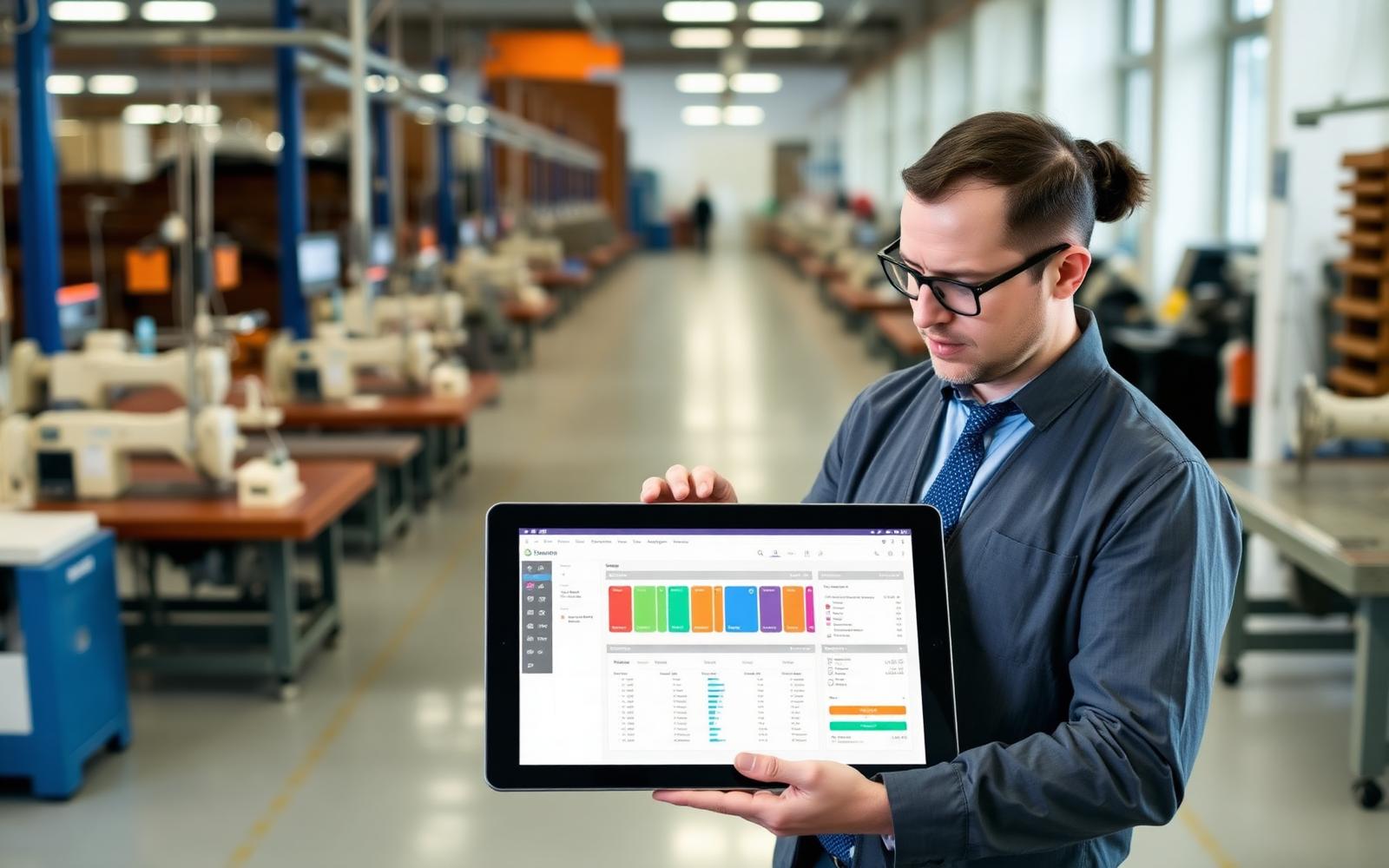
Production floor running on InventiX PlanIT
Excel breaks at scale
One missing formula and the entire weekly plan is wrong by Tuesday.
ERP screens aren't planning
They record what happened. They don't decide what to make next.
PlanIT does decide
Finite capacity, real constraints, publishable plan in one click.
Features at a glance

Everything an international operations team expects — in one platform.

Twelve capabilities your planners, plant heads and IT team will tick off on day one. Each one is engineered for the way real factories actually run — not a brochure feature list.

Finite-capacity engine
Deterministic scheduler that respects calendars, shifts, skills, tools and material.
What-if simulation
Sandbox scenarios scored on OTD, throughput, WIP and OT before you publish.
Drag-and-drop Gantt
Multi-resource Gantt that re-plans every downstream operation instantly.
Bottleneck control
Theory of Constraints buffers, DBR release and live load heatmaps.
ERP-grade integration
REST, SOAP, SFTP and Excel connectors — bi-directional sync, full audit.
Exceptions & alerts
Material shortages, breakdowns and SLA risk surface in real time on web and mobile.
Plan publish workflow
Role-based approvals, version history, electronic sign-off and audit trail.
Skill-matrix planning
Operator capability, certifications and learning curves driven into the schedule.
Live KPI cockpit
OEE, OTD, schedule attainment, WIP days and bottleneck utilisation in one view.
Global rollout-ready
Multi-plant, multi-site, multi-time-zone and multi-currency from day one.
Localisation
English, French, Spanish, Arabic, Hindi, Tamil and Bahasa — extensible at customer level.
Enterprise security
SSO/SAML, RBAC, encryption in transit and at rest, immutable audit logs.
Modules

Five modules. One connected plan.

Finite-capacity scheduling that respects every constraint
01 · Scheduling Engine

Finite-capacity scheduling that respects every constraint

PlanIT's core is a deterministic finite-capacity scheduler. It plans against your actual calendars, shifts, manpower skills, machine availability, mold sets, tooling and material readiness — not an infinite-capacity MRP wish-list.

  • Forward, backward and bidirectional scheduling
  • Setup, run, teardown and changeover times modelled per resource
  • Sequence-dependent setup matrices (color, thickness, hardness)
  • Multi-level BOM and routing with alternates
  • Material-constrained scheduling with reservation logic
Compare alternate futures before you commit to one
02 · What-If Simulation

Compare alternate futures before you commit to one

Every planner faces the same question — what happens if I take this rush order, lose this machine for a shift, or push overtime on Saturday? PlanIT runs each scenario as a sandboxed copy of the live plan, scores it, and lets you publish only the winner.

  • Side-by-side scenario compare on OTD, throughput, WIP and OT cost
  • Probability bands on promise dates
  • Sandbox isolation — no impact on live plan until you publish
  • Saved scenarios for monthly S&OP reviews
A drag-and-drop Gantt that actually re-plans downstream
03 · Planner Workspace

A drag-and-drop Gantt that actually re-plans downstream

Move a work order on the Gantt and PlanIT instantly recomputes every downstream operation against finite capacity. Colour-coded risk, priority and material-clearance flags make the next decision obvious — no SQL, no spreadsheets.

  • Multi-resource Gantt with zoom from shift to quarter
  • Lock, freeze, pin and protect specific orders
  • Conflict highlighting with one-click suggested fixes
  • Side-panel 360° view: order, route, material, history
See the constraint before it slips your delivery
04 · Capacity & Bottlenecks

See the constraint before it slips your delivery

PlanIT applies Theory of Constraints logic continuously — surfacing the true bottleneck for each product family, sizing the right buffer in front of it, and warning when sequencing decisions risk starving or overloading it.

  • Live load vs capacity heatmaps by resource group
  • Bottleneck buffer sizing and penetration alarms
  • Drum-Buffer-Rope release controls
  • Skill-matrix-aware manpower loading
Lives on top of your ERP, not in spite of it
05 · Integration Layer

Lives on top of your ERP, not in spite of it

PlanIT integrates with SAP, Oracle, MS Dynamics, Infor, Tally and custom ERPs via REST APIs, secure file drop or governed Excel templates. Orders, BOMs, routings, inventory and confirmations flow both ways — your ERP stays the system of record.

  • REST API, scheduled SFTP, or Excel templates
  • Bidirectional sync: orders in, schedule + confirmations out
  • Field-level mapping UI — no consultant required for changes
  • Audit log on every external write
ROI — how PlanIT pays back

Six measurable ROI levers. Most deployments pay back inside 4–6 months.

The economics of a PlanIT deployment are rarely a single number. They are the compounding effect of several leaks being plugged at once. The model below is what we jointly build with your finance team during the discovery phase.

Planner time recovered

1 senior planner saves 25–35 hours/week of Excel maintenance and firefighting.

Formula: 30 hrs/wk × 50 wks × loaded cost = recurring annual saving
Typical: $35k – $80k / planner / year
Throughput gain on bottleneck

Theory-of-Constraints sequencing and DBR release typically unlock 15–25% more output on the constraint resource.

Formula: Δ throughput × contribution margin per unit
Typical: Often the single largest line item
WIP & inventory reduction

Material-constrained scheduling and synchronised release cut average WIP by 25–35%.

Formula: Δ WIP × cost-of-capital + storage + obsolescence
Typical: $50k – $400k / plant / year
Expedite & penalty avoidance

Earlier visibility into at-risk orders removes most air-freight expedites and SLA penalties.

Formula: Historic expedite spend × 60–90% avoided
Typical: $25k – $300k / plant / year
Overtime rationalisation

Schedule attainment improves, so reactive weekend OT drops without hurting OTD.

Formula: Δ OT hours × premium rate
Typical: 10–20% of OT spend removed
Customer-retention premium

Reliable delivery earns preferred-supplier status with global brands and modest price premiums on repeat business.

Formula: Strategic — modelled per account
Typical: Compounds year over year
4–6 mo
Typical payback period
3–5×
Year-one ROI multiple
15–25×
Three-year ROI on bottleneck-bound plants
$0
Cost of the initial process study
Measured impact

The numbers reference deployments publish after go-live.

99%
On-time delivery achieved at reference deployments
30%
Average reduction in WIP inventory
22%
Throughput gain on bottleneck resources
4 wk
Typical go-live from kickoff
Faster re-planning vs Excel-based teams
90%+
Reduction in weekly planning effort

Customer identities are anonymised. The numbers are real and validated jointly with each customer's finance team during quarterly review.

Industry use cases

Engineered for the constraints your industry actually runs into.

PlanIT ships with industry-tuned constraint libraries, KPI packs and reference deployments across leather, leather goods, furniture, apparel and footwear — so go-live is configuration, not custom development.

Drum-level scheduling for chemistry-bound processes
Leather & Tanneries

Drum-level scheduling for chemistry-bound processes

Pain points
  • Recipe and chemistry compatibility constraints
  • Drum idle hours invisible in Excel
  • MTO vs MTS prioritisation conflicts
With PlanIT
  • Drum utilisation as a managed KPI
  • Material-readiness gate before batch release
  • Planning cycle from 4–6 days → under 10 hours

Line balancing and operator productivity at SKU complexity
Leather Goods & Fashion Accessories

Line balancing and operator productivity at SKU complexity

Pain points
  • Hundreds of SKUs, frequent style insertions
  • Operator skill variance hidden in averages
  • Quality rework loops invisible to planning
With PlanIT
  • Operator-level productivity tracking
  • Skill-matrix-aware line balancing
  • Rework loops modelled into the schedule
SAM-based planning across multi-unit make-to-order
Furniture & Upholstery

SAM-based planning across multi-unit make-to-order

Pain points
  • Customised BOMs per order, no two alike
  • Workload imbalance across cutting, frame, upholstery
  • Incentive schemes detached from real output
With PlanIT
  • SAM library drives realistic capacity
  • Workload balanced across units in one pass
  • Data-driven incentives for 500+ operators
Line-based, calendar-aware planning for export volumes
Apparel & Footwear

Line-based, calendar-aware planning for export volumes

Pain points
  • EU/US ship-date pressure
  • Line changeover penalties poorly captured
  • Material clearance disconnected from cut plan
With PlanIT
  • Line + style sequencing with changeover penalties
  • Material-clearance flags drive release
  • Ship-window visibility for merchandising
Who PlanIT is built for

Built for the four people who own the plan.

Plant Head

One credible plan the floor and the buyer both believe.

Production Planner

Re-plan in minutes after disruptions instead of late-night Excel.

Operations Director

Real OTD, throughput and OT visibility across plants and regions.

CIO / IT

Sits cleanly on ERP — REST, SFTP or Excel. Cloud, private or on-prem.

Technology & architecture

Built for global IT to actually deploy.

Cloud, private cloud or on-prem. Single tenant or multi-plant, multi-region. PlanIT slots into your existing security, identity and ERP stack without forcing a re-platform — and meets the controls global enterprise security teams review on day one.

SAML 2.0OIDCSCIMTLS 1.3AES-256ISO 27001-alignedGDPRSOC 2 readiness
Engine
Java-based deterministic scheduler, horizontally scalable, plans 100k+ operations in under 60s.
Deployment
Cloud (AWS / Azure / GCP), private cloud, or on-prem. Single or multi-tenant.
Security
SSO via SAML 2.0 / OIDC, RBAC down to field level, TLS 1.3 in transit, AES-256 at rest.
Compliance
Aligned with ISO 27001 controls; GDPR-friendly data residency; SOC 2 readiness pack available.
Data
PostgreSQL primary store, columnar warehouse for analytics, point-in-time recovery.
Integration
REST, SOAP, SFTP, Excel templates; pre-built adapters for SAP, Oracle, MS Dynamics, Infor, Tally.
Workflow
Role-based approval flows for plan publish, exception escalation and master-data changes.
Extensibility
Customer-level constraint library, custom KPIs, webhook events, public REST API.
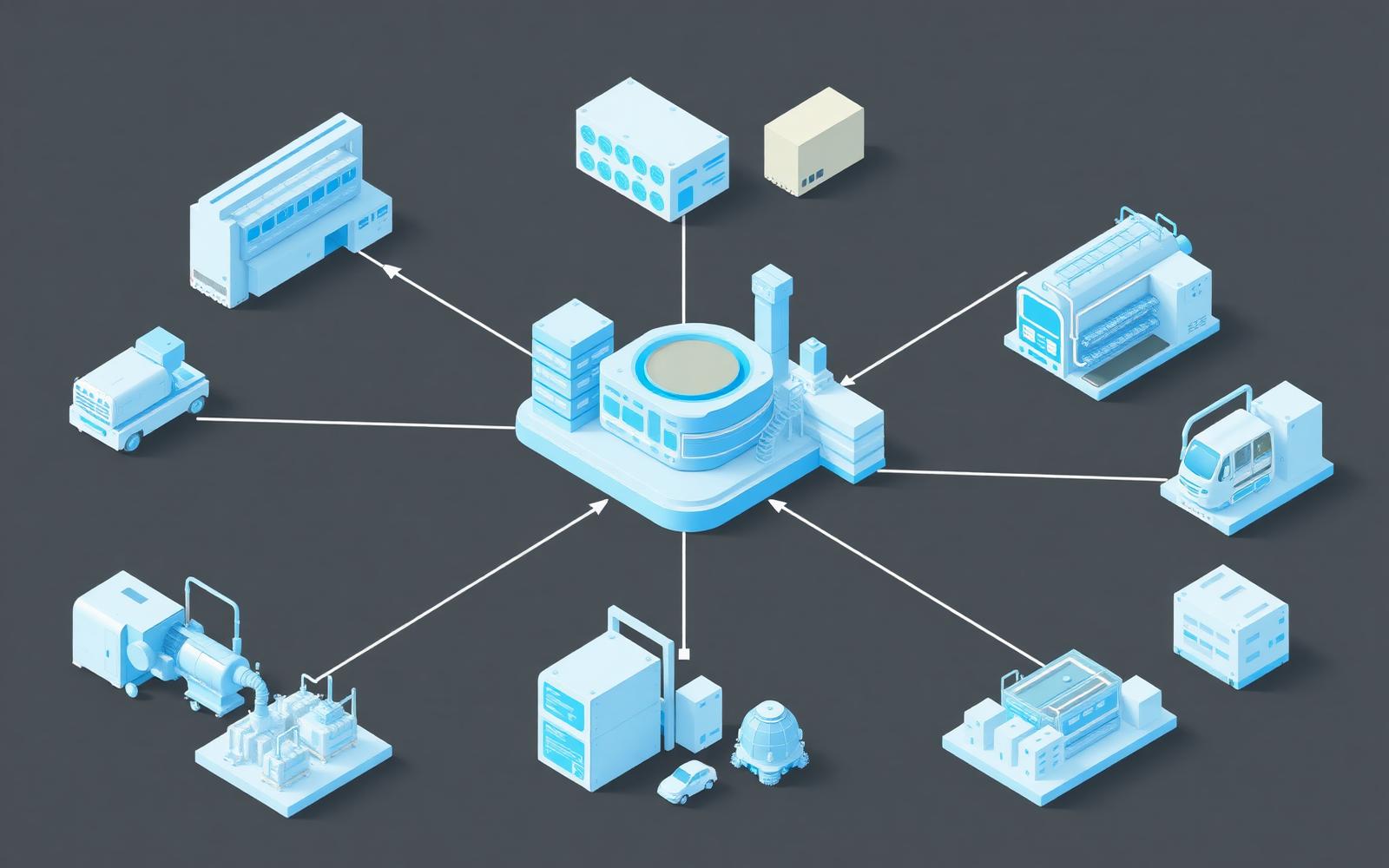
PlanIT integration topology
Integration topology

Your ERP stays the system of record. PlanIT is the planning brain on top.

  • Pre-built adapters: SAP S/4 & ECC, Oracle E-Business & Fusion, MS Dynamics, Infor, Tally and custom REST APIs.
  • Bi-directional sync: orders, BOMs, routings, inventory and confirmations flow both ways on schedule or near-real-time.
  • Field-level mapping UI — IT changes mappings without raising a consulting ticket.
  • Idempotent writes with audit log; every external update is reversible and traceable.
  • Optional MES / shop-floor integration via OPC-UA, MQTT or REST.
How PlanIT runs the planning cycle

From raw ERP feed to a published, executable plan — six stages, one platform.

01
Ingest

Orders, BOMs, routings, inventory and capacity arrive from ERP / MES on schedule or via API.

02
Constrain

PlanIT applies calendars, skills, tooling, chemistry rules and material-readiness gates.

03
Optimise

Finite-capacity engine sequences against priority, due date, changeover and bottleneck buffers.

04
Simulate

Planner sandboxes scenarios — rush orders, breakdowns, OT — and scores each on OTD, throughput, WIP.

05
Approve

Role-based publish workflow with electronic sign-off, version history and audit trail.

06
Execute

Plan pushes to shop-floor terminals and ERP; confirmations and exceptions flow back live.

Inside the product

A look at the screens planners actually live in.

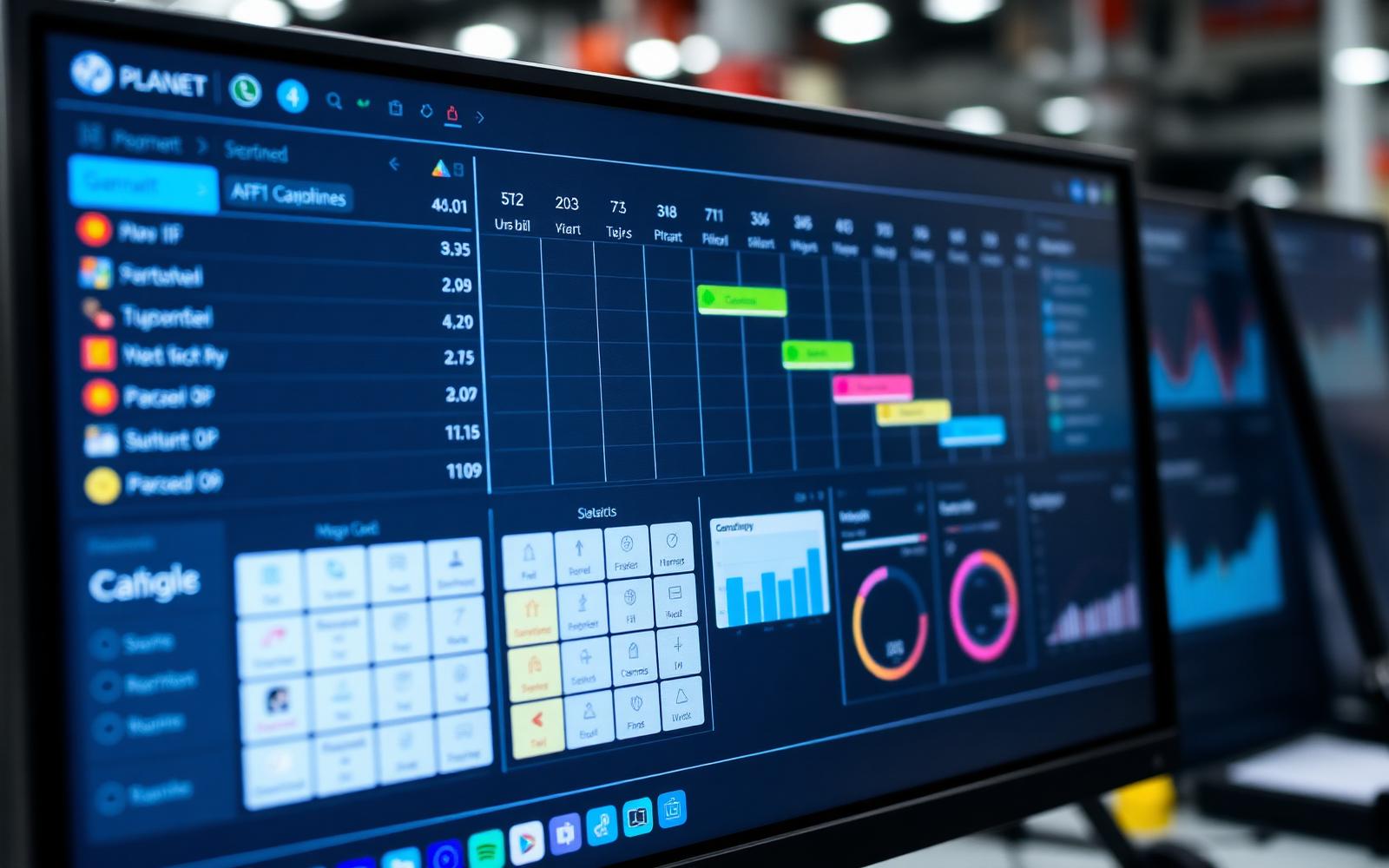
Live planning dashboard
KPIs, capacity heatmap and exceptions, one screen.
Drag-and-drop Gantt
Drag-and-drop Gantt
Multi-resource Gantt with downstream re-plan.
What-if scenarios
What-if scenarios
Side-by-side compare before publish.
Capacity & bottlenecks
Heatmap of true constraint per resource group.
Planner on the floor
Tablet-friendly views for shop-floor walks.
Integration topology
PlanIT as the planning brain of your ERP stack.
Engagement model

From kickoff to first published plan — typically 4 weeks.

  1. 01
    Week 1
    Process Study
    Engineers map your floor, orders and constraints. Reference data scoped, success metrics agreed.
  2. 02
    Week 2
    Model Build
    Routings, BOMs, calendars, skill matrices and constraint libraries loaded and validated.
  3. 03
    Week 3
    Integration
    ERP feed, master-data sync, plan-publish workflow and approval roles wired and tested.
  4. 04
    Week 4
    Go-Live
    First weekly plan published. Engineers on-site through month-end stabilisation and KPI baseline.

See PlanIT scheduled against your real orders.

We model one of your real product families and walk you through a live plan — no slides, no sales script.